
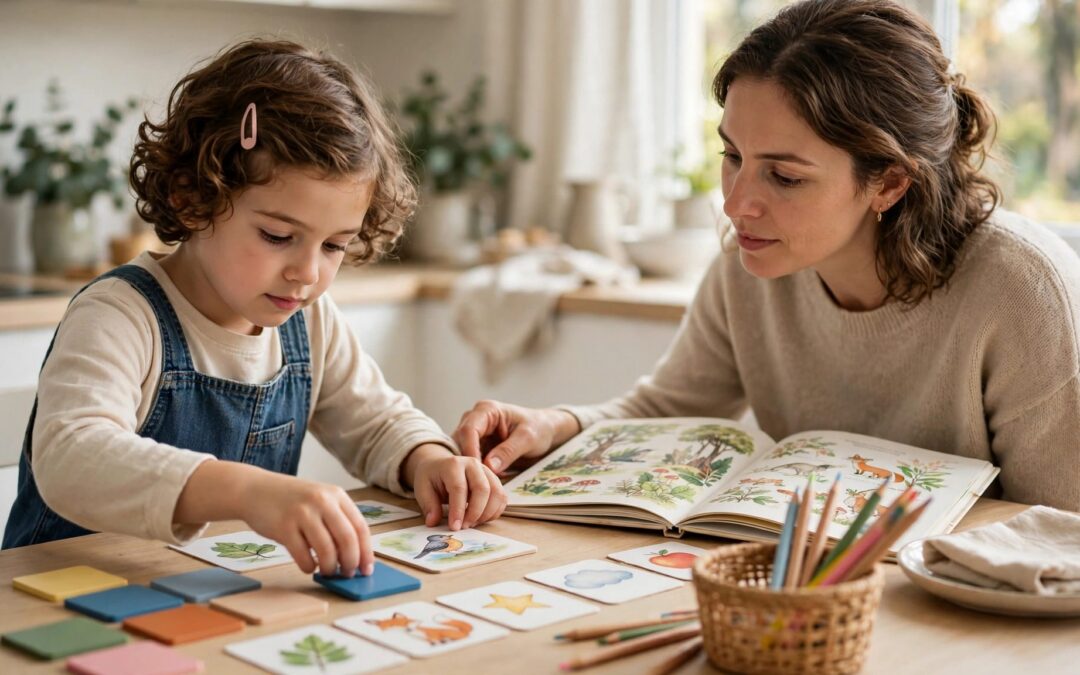
Beginning readers don’t need marathon study sessions or a tower of flashcards tall enough to frighten the cat. They need short, clear practice with sounds, spelling patterns, and real words they can read.
The most useful grade 1 phonics activities build on letter recognition. They help your child connect letters to sounds, build a word, read it, and spell it. A few focused minutes each day can make home practice feel manageable instead of like a tiny after-school shift.
Start with skills your child nearly knows, then add one small stretch. Use free phonics worksheets as an optional follow-up after hands-on word work.
Key Takeaways
- Practice phonics in a steady order: review letter recognition and familiar sounds, teach one pattern, read words, spell words, then read a short text.
- Use letter tiles, paper cards, magnetic letters, or a pencil before reaching for a worksheet.
- Teach short vowels, consonant blends, digraphs, silent e, vowel teams, and two-syllable words in small steps.
- Ask your child to say sounds aloud. Reading and spelling should travel together.
- Keep high-frequency words in the mix, but point out the sound parts your child can decode.
- If a child guesses often, return to easier word patterns rather than adding more difficult lists.
What Grade 1 Readers Need From Phonics Practice
First grade is when children move beyond letter recognition and begin using print to read unfamiliar words. The Common Core foundational reading skills standard, CCSS.ELA-LITERACY.RF.1.3, builds on phonological awareness and includes decoding one-syllable words, common consonant blends, final silent e patterns, vowel teams, and two-syllable words. Together, these skills support independent word reading and broader reading skills.
A good home routine follows the same basic logic as explicit phonics instruction. Children hear the sounds, see the letters, blend the word, and then write it. This hear-see-blend-write sequence is consistent with evidence-based Science of Reading principles, while children may need different pacing and support. For a helpful overview of this process, see Reading Rockets’ phonics and decoding guidance.
Decoding and encoding belong together
Decoding means reading a printed word. Encoding means hearing a word and spelling it. Effective phonics instruction connects decoding and encoding. If your child reads ship, ask them to build or write ship after reading it.
This catches a common wobble. A child may recognize chop in a stack of cards but write cop when spelling. That response tells you the /ch/ digraph needs more practice.
Start with the pattern your child almost knows
Don’t jump from simple short-vowel words to a parade of vowel teams. If cat, bed, and sun are becoming easy, try final blends such as hand, nest, and jump. When those feel comfortable, introduce a digraph such as sh or ch.
A child who needs many hints has not failed the lesson. The pattern simply needs to shrink back to a more comfortable step.
A 15-Minute Routine for Grade 1 Phonics Activities
A predictable routine takes the fuss out of choosing an activity every afternoon. Begin with sound cards to reinforce letter recognition and familiar spelling patterns without turning reading time into a paperwork festival. This brief, explicit sequence reflects evidence-based Science of Reading principles.
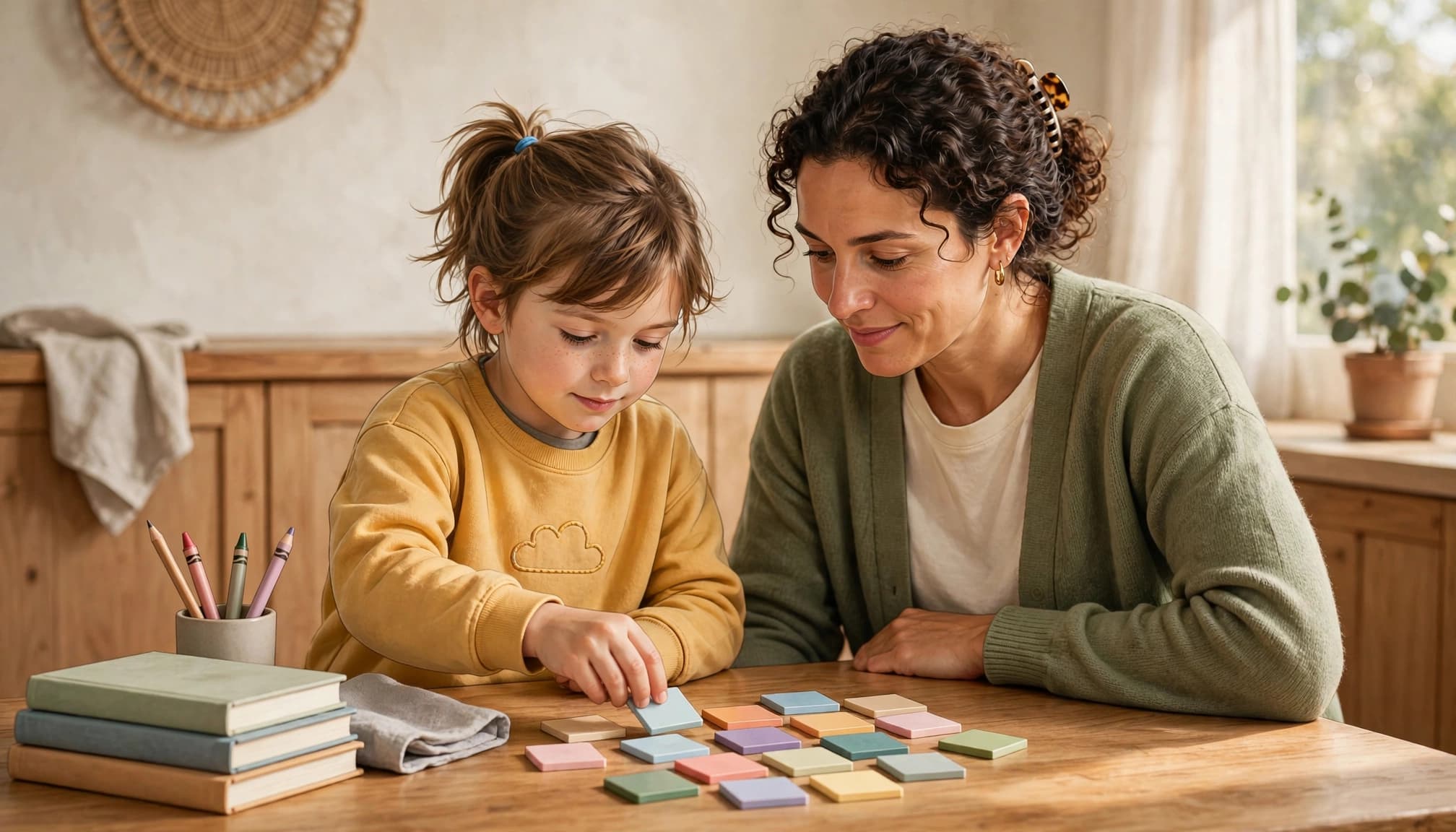
Review sounds and build words
Spend three minutes reviewing five to eight known cards. Show m, and your child says /m/. Mix in digraph cards such as sh once they know them. Say sounds instead of adding an extra vowel sound, so use /t/ rather than “tuh.”
Next, build three or four words with letter tiles. For a short-vowel lesson, make map. Then change one letter to make mop, top, and tap. Ask your child to slide a finger under each letter as they blend the sounds.
Read, spell, and use one sentence
Dictate two spelling words from the lesson. This brief sequence practices decoding and encoding. First, have your child read the pattern, then say rush, stretch the sounds, and let your child choose the letters.
Read a decodable sentence that uses the pattern, such as “The fish is in the dish.” Keep a small notebook of words your child can now read independently. If your child enjoys paper practice, free phonics worksheets offer an optional extension.
The Grade 1 English lessons at 2cool4school can also support word analysis, reading strategies, grammar, and writing.
Finish with a short decodable book or reread a favorite page. Combining word work with connected text gives children practice using reading skills for meaning. Tim Shanahan’s discussion of balancing phonics is a useful reminder that children need connected reading, not isolated word practice all day.
Playful Phonics Games for Blends and Digraphs
Consonant blends keep each sound, as in st in stop. Consonant digraphs represent one new sound, as in sh in ship. That distinction can feel slippery at first, so have your child say the sounds while playing.
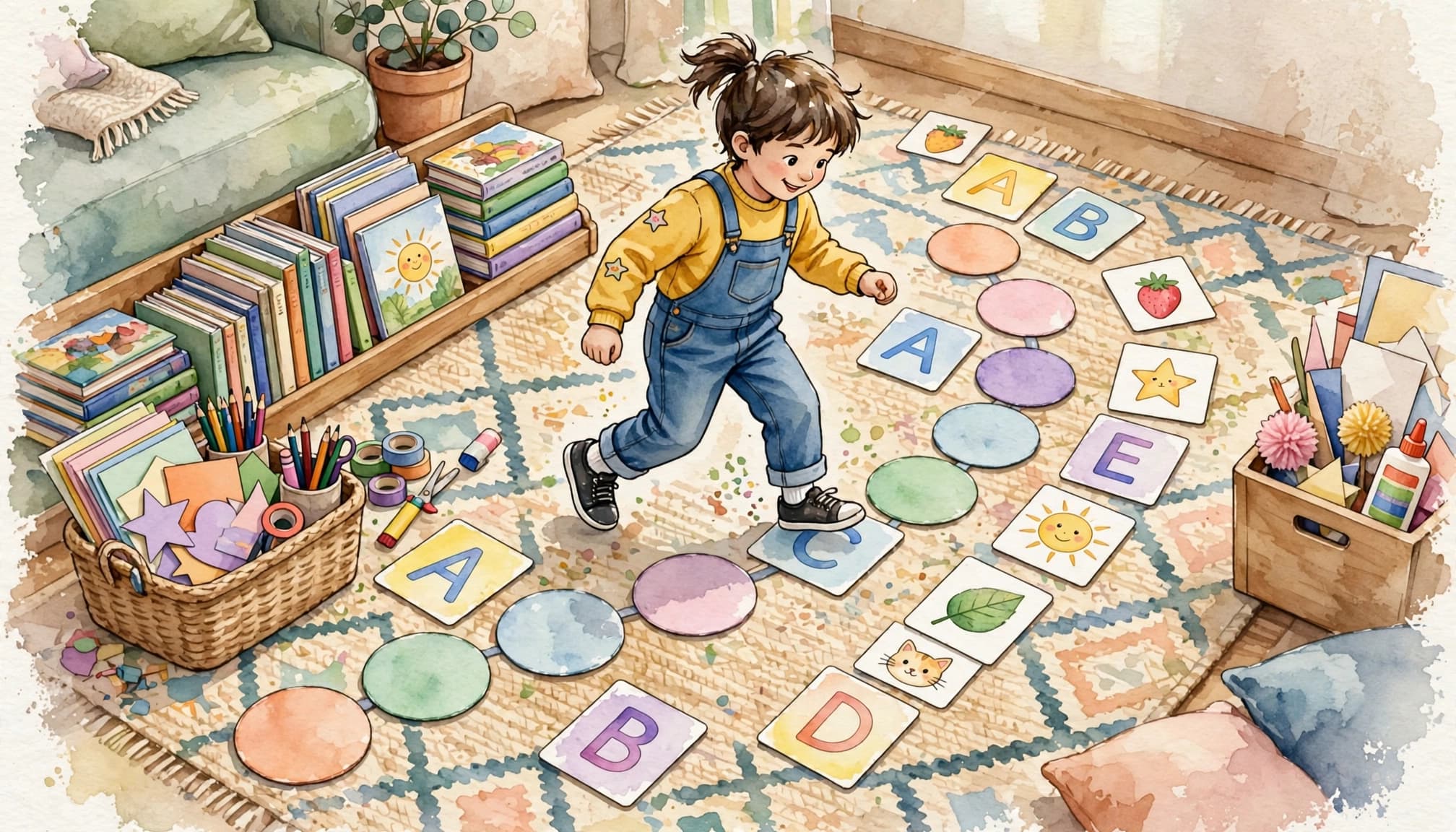
Make a word-path game
Write words on index cards and place them across the floor. Your child reads a card before stepping on it. Use one pattern at a time, such as shop, shut, shell, and fish for sh.
For blends, make cards with flag, clap, sled, and drum. If a word causes trouble, say it slowly, then have your child tap each sound. Keep the path short enough to finish with a grin.
Play phonics Go Fish and Simon Says
For Go Fish, make pairs of words with the same feature: chin and chop, or frog and from. These interactive games require your child to listen, speak, and read. To request a card, your child says the pattern: “Do you have a word with ch?”
Simon Says can become a speedy sound hunt. Say, “Simon says touch something that starts with /b/,” or “find something with the /sh/ sound.” Connect each initial sound to a known letter for letter recognition, but keep sound identification separate from reading print. Use items around the room, not mystery objects hidden in the attic.
These grade 1 phonics activities are simple phonics games that build attention without requiring special supplies. They reinforce sound-pattern practice children may encounter in classroom activities. Paper, a marker, and mild silliness do plenty of heavy lifting.
Short Vowels, Long Vowels, and Silent E
Vowels deserve extra time because short vowel sounds can change depending on the word pattern. Begin with short vowels in simple consonant-vowel-consonant words: cat, pet, pig, hop, and sun.
Compare short-vowel word families
Choose one vowel and make a small set of words. For short a, use jam, van, nap, and rag. Read the words, sort them by vowel, then dictate one or two for spelling.
Avoid mixing all five vowels into a large list when your child is still unsure. A smaller set gives them a fair chance to listen, notice, and succeed.
Turn short words into silent-e words
Silent e changes cap to cape, kit to kite, and tub to tube. Build the short word first. Then add the e card at the end and ask your child to read the new word.
Make the change visible by placing the e in a different color. Your child doesn’t need a dramatic speech about magic letters. They need repeated chances to see how the ending creates long vowel sounds.
Later, add common vowel teams such as ai, ee, and oa, followed by R-controlled vowels in car, fern, and bird. Revisit R-controlled vowels in mixed reading instead of introducing several patterns at once. After your child handles a pattern with tiles or word sorting, use free phonics worksheets to review it.
Two-Syllable Words and High Frequency Words
First graders eventually meet longer multisyllabic words that look intimidating. Dividing them by familiar syllable patterns makes each word more manageable. Closed syllables usually contain one vowel followed by a consonant, producing a short vowel sound, as in rab-bit and nap-kin. In both words, the closed syllables help children read the short vowels with confidence. This explicit work with syllables and word parts fits structured literacy principles associated with the Science of Reading.
Clap, divide, and blend the chunks
Say sunset aloud and clap the two syllables: sun-set. Write a small line between the chunks, then have your child read each part before blending the whole word.
Try picnic, magnet, dentist, and lunchbox once the parts feel familiar. Keep the word choices friendly. A child who can read rabbit gets useful practice without wrestling a 12-letter beast.
As your child improves, compare these syllable patterns across new words. Later, use the same routine with longer multisyllabic words.
Read high-frequency words with a pencil
High-frequency words appear often in children’s books. Some are fully decodable, such as can, him, and shop. Others include an irregular portion that doesn’t match the sound pattern your child has learned yet.
The terms high frequency words and sight words are often used interchangeably. Children should still examine the sound-spelling parts whenever possible. Read said together and circle the familiar sound parts. Explain that the middle spelling is unusual and needs remembering. Then put the word in a sentence your child can read: “Sam said, ‘I can hop.'”
This approach treats these words as words to study, not mysterious symbols. Add only a few at a time and use them in stories, notes, and simple sentences. Free phonics worksheets can offer optional review, but they shouldn’t replace oral reading and word building.
Use Worksheets After Hands-On Practice
Worksheets can check what your child understands, but they shouldn’t introduce a new phonics pattern. Let your child manipulate letters, sort cards, and say sounds first. The pencil work comes after the idea has somewhere to land.
Choose short pages with one clear job
Look for grade 1 worksheets with a small number of words, room to draw, and one clear pattern. A page on ch shouldn’t suddenly toss in th, wh, and ph like an overstuffed suitcase.
Use one item as a conversation starter. If the page asks your child to circle ship, have them build the word with tiles, point to sh, read it, and then complete the printed item. The written answer comes last.
Parents can find free phonics worksheets for Grade 1 phonics, sight words, word reading, and sentence practice when they need focused follow-up.
Connect practice to a broader school plan
A homeschool curriculum works best when reading practice connects to the rest of the week, rather than appearing as a surprise pile of pages. Use phonics while writing a grocery list, labeling a drawing, or reading a science book together.
For families covering several subjects, 2cool4school’s free curriculum for Grades 1-8 includes human-curated instructional videos across English, math, science, health, and social studies. Its English and math resources can support Common Core-aligned learning, while the other subjects provide broader support for a Grade 1 curriculum.
Free worksheets are useful for review, travel days, or checking a tricky skill. They aren’t required after every game.
FAQ About First Grade Phonics at Home
How often should a first grader practice phonics?
Aim for 10 to 15 minutes on most days. Stop while your child is still engaged. Four short sessions usually beat one long session full of sighs, wandering pencils, and guesses.
What should I do when my child keeps guessing words?
Cover the picture if it gives away the answer. Ask your child to point to each letter or spelling chunk, say the sounds, and blend them. For multisyllabic words, return to smaller chunks and easier patterns, such as closed syllables, before trying the original word again.
Can videos and apps support phonics learning?
They can offer extra repetition after you have taught the pattern, especially through short phonics games or an app. Pause a video before the answer appears and ask your child to read or spell the word first. An app such as PocketPhonics includes letter sounds, first words, and handwriting practice, while free phonics worksheets can provide optional offline review of sight words and spelling patterns. These tools work best as supplements to talking, reading, and writing together.
Build Reading Confidence One Word at a Time
The strongest home phonics routine is short, clear, and repeated. Teach one pattern, let your child build and read real words, then use those words in a sentence or book.
As your child gains confidence, move forward in small steps and circle back often. For extra support across subjects, explore 2cool4school’s complete Grade 1 learning program and choose the lessons that fit your child’s next reading step.