
A child can fill in a multiplication worksheet and still freeze when asked what 6 × 4 means. If grade 3 multiplication facts aren’t sticking, another page of mixed problems may be the last thing they need.
Start with equal groups your child can see, then practice a small set of facts in different ways. The goal is steady recall and an explanation that makes sense. Here’s how to find the sticking point and make a short practice session count.
What multiplication fluency means in Grade 3
The Grade 3 Common Core math standard 3.OA.C.7 calls for students to multiply and divide fluently within 100. This computational fluency, including multiplication fact fluency, means understanding a fact or using a reliable strategy, not meeting an arbitrary speed target. The standard names the relationship between multiplication and division as one strategy, but doesn’t prescribe a one-minute test or a particular worksheet.
For 6 × 4 = 24, 6 and 4 are factors, and 24 is the product. In the related equation 24 ÷ 6 = 4, 24 is the dividend, 6 is the divisor, and 4 is the quotient. You don’t need to turn dinner into a vocabulary quiz. Use the words when they help your child talk about an equation.
A fluent child can recall a familiar fact or reach it using a strategy they understand. If your child needs to count every dot in 6 groups of 4, begin with the groups. Automaticity, or quick recall, can come later, once the idea is clear.
Practice grade 3 multiplication facts with models first
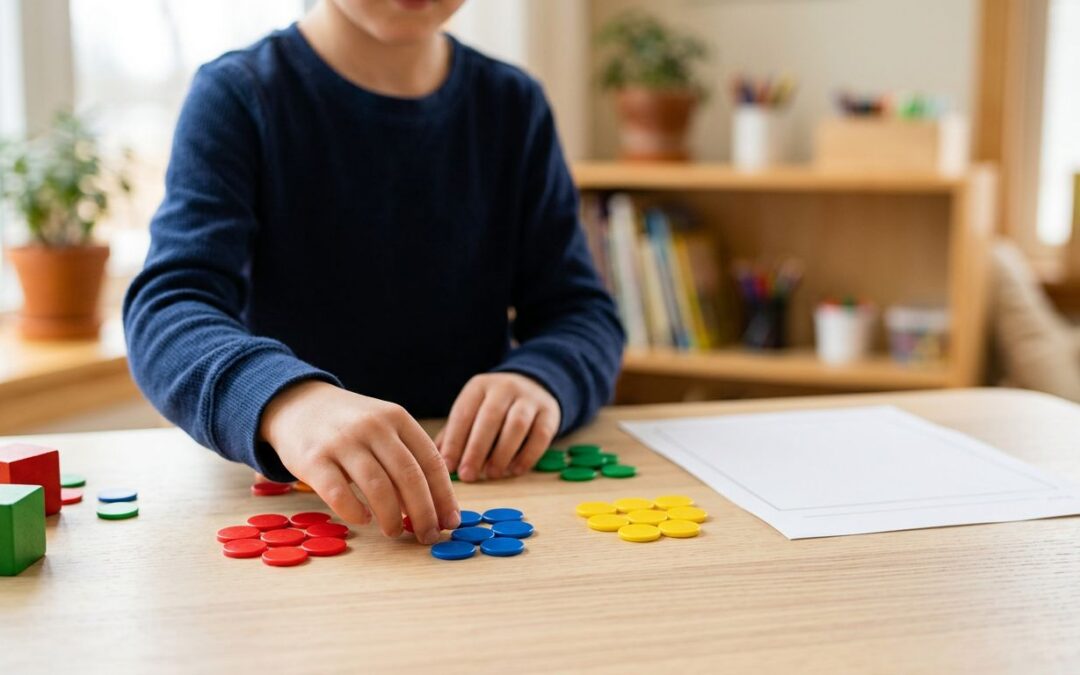
In Grade 3, single-digit multiplication facts should describe something a child can build or draw. Counters, coins, blocks, and pencil marks all work. No special math kit needs to take over the kitchen table.
Build equal groups and arrays
Put out 18 counters and ask your child to make 3 equal groups. Once they have 6 in each group, ask them to write number sentences, such as 3 × 6 = 18, beside the counters. Ask, “What does the 3 count? What does the 6 count?” If they can’t say, move the counters together again.
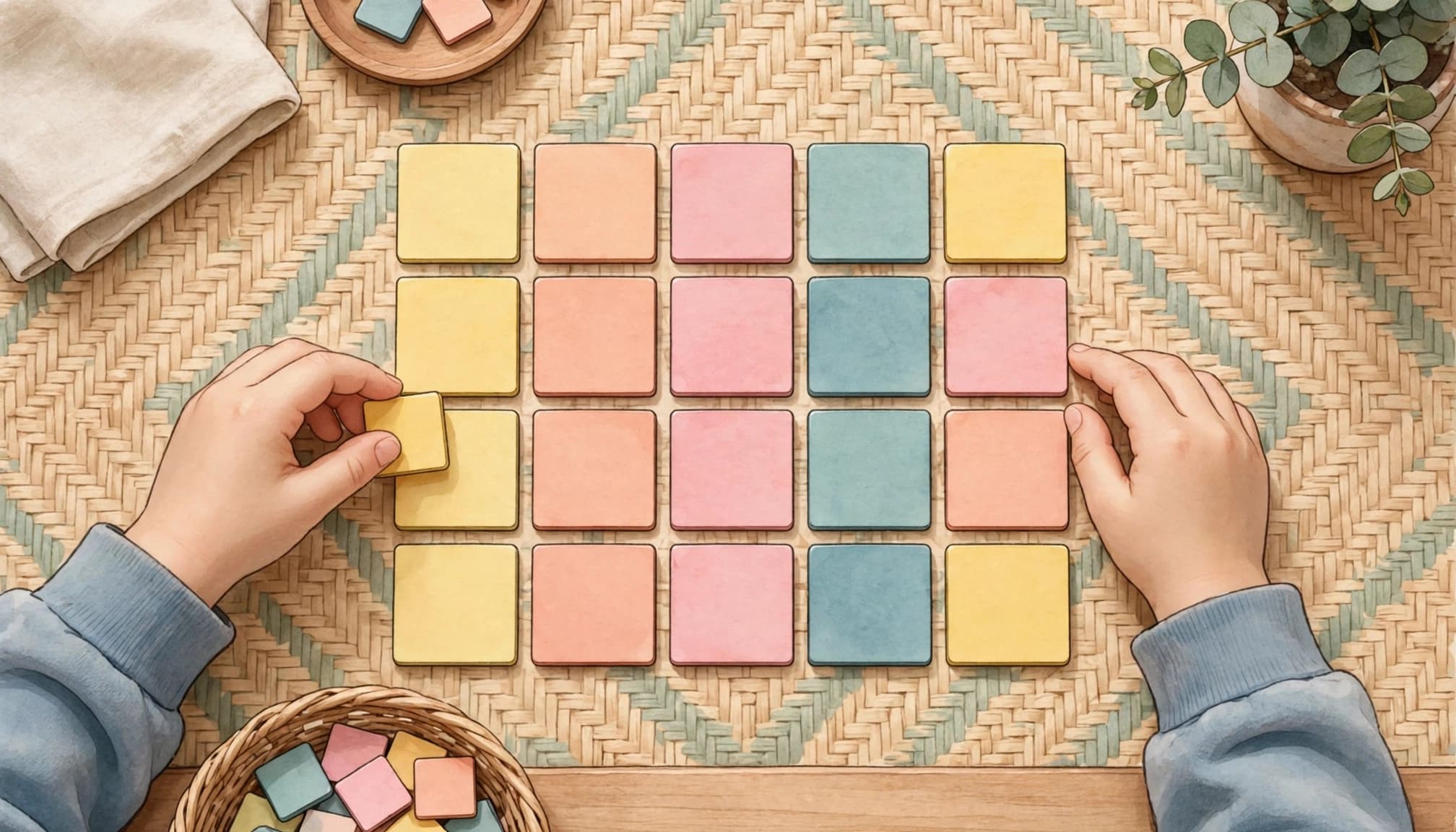
Next, arrange them in 3 rows of 6. This array keeps the groups visible and makes each row easy to check. Try a new array of 4 rows of 3, then let your child write the matching equation. You can find more visual examples in 2cool4school’s free Grade 3 curriculum.
Connect skip counting to the groups
Skip counting helps when your child knows what each count represents. Point to four groups of 5 and say, “5, 10, 15, 20,” touching one group at a time. Then ask how many groups you counted.
Rotate an array of 3 rows of 6 so it shows 6 rows of 3. Both arrangements contain 18 counters. This is the commutative property: 3 × 6 and 6 × 3 have the same product. Your child has gained a second fact without counting a second pile from scratch.
Turn known facts into unfamiliar ones
When 7 × 6 causes a long pause, don’t immediately supply 42. Give your child a nearby fact they know and a way to reach the new one.
Break a difficult group apart
Suppose your child knows 5 × 6 = 30. Build five groups of six, then add two more groups of six. The new total is 30 + 12 = 42, so 7 × 6 = 42. Draw a line between the fifth and sixth rows of an array to show where the groups split.
For another route, use 7 × 5 = 35 and add one group of seven. Let your child choose the route that feels easier. Starting with related facts lets your child reason from a known equation instead of immediately checking multiplication charts.
Make fact families do some of the remembering
Once 6 × 7 = 42 makes sense, write the related equations: 7 × 6 = 42, 42 ÷ 6 = 7, and 42 ÷ 7 = 6. These fact families connect multiplication and division.
Then hide one factor: 6 × ___ = 42. Ask your child to use 42 ÷ 6 to find it. Missing factor questions show whether your child understands how fact families connect, rather than simply recognizing a familiar flash card. The free Grade 3 curriculum includes lessons that pair multiplication with related division facts.
Let mistakes tell you what to teach next
A wrong answer is useful information, provided you ask how your child got it. Two children can write “24” for 6 × 5 and need entirely different help.
Match the error to a smaller task
If your child draws five groups but puts different numbers in each, revisit equal groups with counters. If they build six groups of five correctly but skip-count “5, 10, 15, 25,” practice counting by fives while touching each group.
A child who answers 6 × 5 correctly but can’t solve 30 ÷ 6 needs a fact-family activity. Someone who writes 6 + 5 = 11 for 6 × 5 may be mixing up the operations. Ask them to draw each equation to build number sense and see how multiplication differs from addition. Change one thing at a time, then check the same idea with fresh numbers.
Step back when the foundation is shaky
If counting small sets is still difficult, multiplication drills will pile a new task onto an unfinished one. Spend a few minutes grouping and counting objects before returning to third-grade facts. Earlier-grade free worksheets for counting and math practice can help you choose a simpler starting point, including grade 1 worksheets when appropriate.
You don’t need to restart an entire grade 1 curriculum because of one troublesome fact. Choose the particular skill your child needs, practice it, and check whether the multiplication model now makes more sense.
Keep home practice short and repeatable
Ten calm minutes beat a long session that ends with a crumpled worksheet. Optional daily warm-ups can make practice predictable. Pick two or three related facts and keep the materials simple enough to use again tomorrow.
Try a learn, build, recall routine
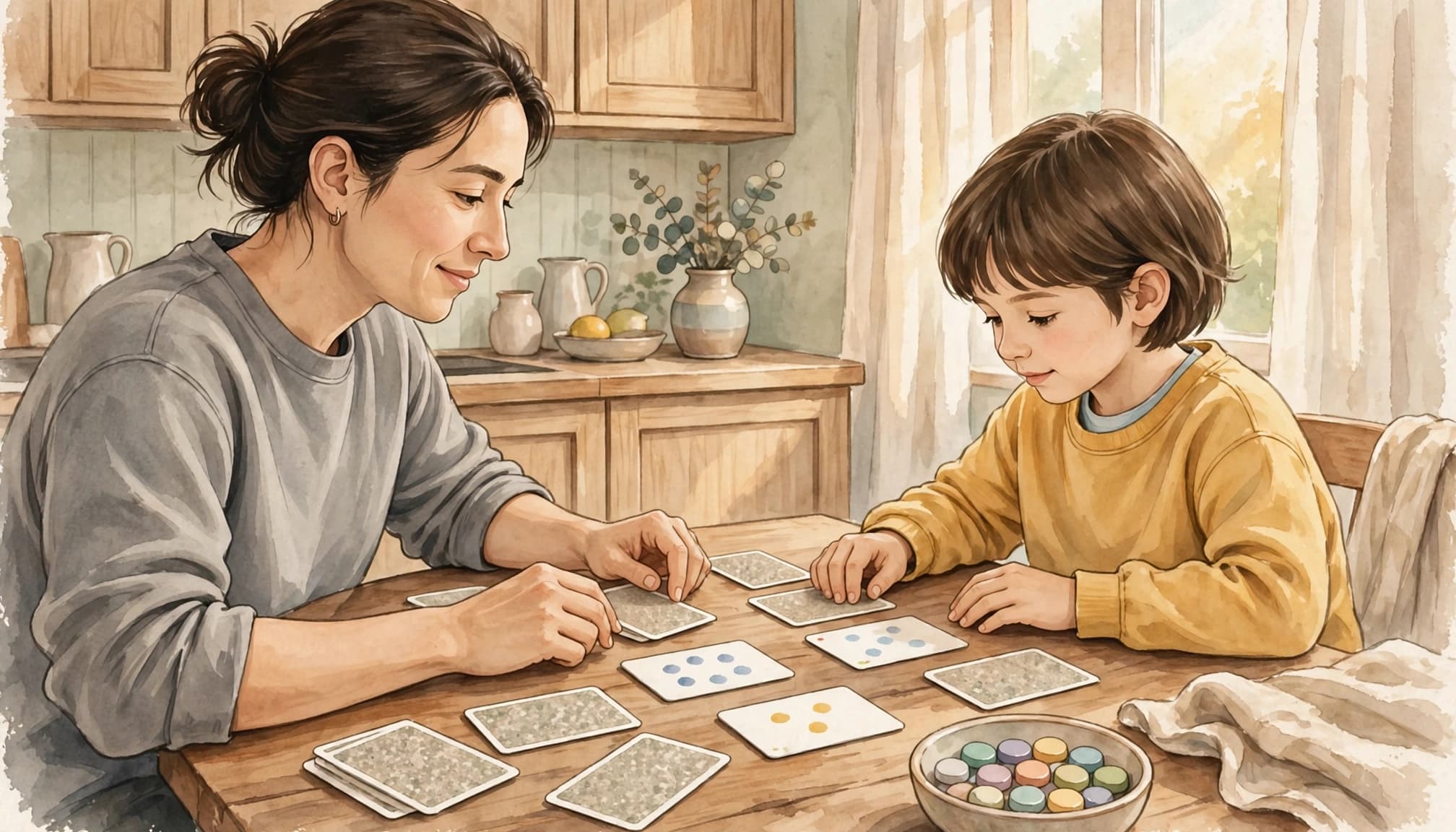
Begin by modeling one fact together. For 4 × 6, build four groups of six or draw four rows of six dots. Next, cover the model and ask for the answer. If recall fails, uncover it and let your child count the groups again.
Then play a quick match: write 4 × 6, 6 × 4, and 24 ÷ 4 on separate cards, with their answers on other cards. Your child matches a card and explains one choice. Finish with one new question on paper. That final answer shows whether the idea travels beyond the counters.
Bring yesterday’s facts back
Practice a new fact today, revisit it tomorrow, then mix it with older facts later in the week. Brief, spaced math practice can support gradual automaticity. The Institute of Education Sciences guide to organizing instruction and study identifies spacing learning over time as a research-supported approach.
For a routine you can repeat without planning a new lesson every morning, keep a small envelope of fact cards. Pull out a few recent cards and a few your child already knows. Correct answers can return another day; uncertain ones can go back to the counters. Keep the mood closer to a card game than a surprise exam.
Use worksheets and timed checks for the right jobs
Math worksheets are handy once your child has seen the skill explained. They can show whether a fact learned with blocks makes sense on paper. But a worksheet won’t notice when a child is repeatedly making the same counting mistake; that’s where a nearby adult helps.
Pick a format that matches the difficulty
Use an array page when your child needs to see groups. Choose a missing-factor page to practice 7 × ___ = 35. A fact-family page fits a child who knows products but hesitates with division. Save mixed single-digit multiplication sheets for review after several fact groups feel familiar.
You can browse 2cool4school’s free printable worksheets for Grades 1 through 8 and choose a Grade 3 math page to download as a printable PDF for today’s goal. Try a handful of questions first. If the worksheet provides an answer key, use it to check them together before a mistaken method gets another full page of rehearsal.
Treat a one-minute drill as a check
Timed drills can help you check fact recall and automaticity. But don’t introduce a clock while your child is still learning what the equation means. If timing upsets them, skip it and observe their work during an untimed set.
When you do use a one-minute check, compare your child with their own earlier work. Look at which facts were answered correctly, which took a strategy, and which need a model. Afterward, review two missed facts together. A score alone doesn’t tell you what to practice tomorrow.
Add instruction when practice alone stalls
If your child misses 4 × 6 after several worksheets, pause and teach single-digit multiplication another way. A short video may offer a fresh explanation of multiplication fact fluency. Stop it at an example and ask your child to build or draw the groups. Then return to a few written questions.
For homeschool families and parents supplementing schoolwork, 2cool4school organizes human-curated video lessons by grade and topic. Start with its free Grade 3 curriculum when arrays need work, or use the math-facts lesson linked above for 2s, 5s, and 10s. One focused lesson followed by a few questions is easier to respond to than a stack of unrelated pages.
Key takeaways
- Build or draw a fact before asking your child to recall it quickly.
- Practice a small set, then revisit it across several days.
- Ask how an answer was found so mistakes point to the next activity.
- Use worksheets for focused follow-up and timed checks only when your child is ready for them.
Frequently asked questions
Which multiplication facts should a struggling third grader practice first?
Start where your child can see a pattern. Single-digit multiplication facts with 2, 5, and 10 work well with paired objects, fingers, and groups of ten. Check that they can explain the groups, not just recite a sequence. Then connect familiar facts to less familiar ones, such as using 5 × 6 to work out 7 × 6. Move on when your child can build, answer, and explain several examples with little prompting.
Should my child memorize every fact before learning division?
No. Related division questions can help multiplication make sense. If your child builds 4 groups of 6 and counts 24 objects, ask how many groups of 6 fit into 24. Keep the objects visible at first. Over time, the equations 4 × 6 = 24 and 24 ÷ 6 = 4 become familiar partners, not two separate sets of facts to memorize.
How do I know whether practice is helping?
Keep a small record of a few target facts. Once a week, ask your child to solve them without the model, then explain one using a drawing or groups. Notice whether they need less counting and can correct an error after looking at the groups. If the same mistake keeps returning, change the explanation or model instead of adding more questions.
Give each fact a way to make sense
That worksheet pause at 6 × 4 is a clue, not a verdict on your child. Start with groups they can see, connect each new fact to one they know, and return to it in short sessions. Understanding gives recall something to hold onto.
If your child needs a fresh explanation before the next practice page, try a focused Grade 3 video lesson and work through one example together.