
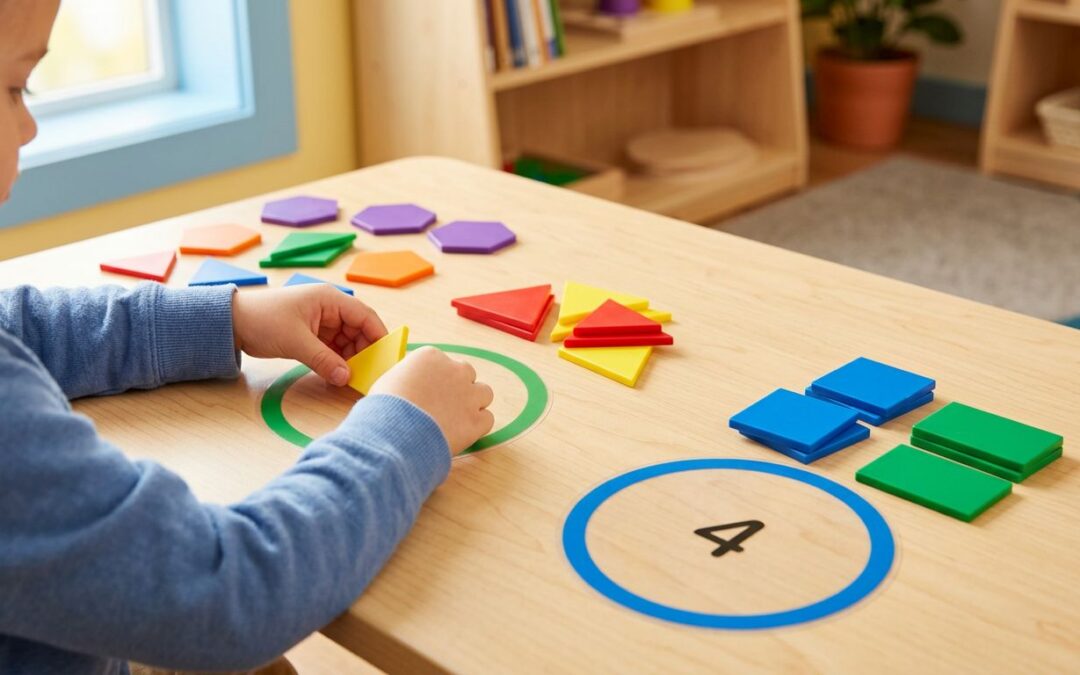
Your child spots a triangle instantly, until you turn it upside down and the triangle apparently disappears. In 2D shapes grade 2 lessons, children learn to identify figures by observable features, not by their familiar position or appearance.
The goal is describing with evidence: “It has three straight sides and three corners.” Observing corners and sides builds shape recognition and supports identifying shapes, naming, sorting, and drawing.
Start with shapes your child can move, then help them put their observations into words.
What Grade 2 Students Should Know About Geometry 2D Shapes
Second-grade students move beyond recognizing familiar pictures. They practice identifying shapes and drawing figures by examining their geometric properties and attributes of shapes.
The Common Core shape standard asks children to recognize and draw shapes with specified attributes. It includes identifying triangles, quadrilaterals, pentagons, hexagons, and cubes. Cubes are three-dimensional, so keep them separate from two-dimensional shapes during a lesson about flat figures.
For 2D shapes, your child should work toward counting sides and corners, comparing side lengths, and explaining classifications. A useful answer sounds like, “It’s a hexagon because it has six straight sides.”
If those words feel unfamiliar, revisit basic recognition from the Grade 1 curriculum first. Begin with circles, triangles, squares, and rectangles before adding less familiar polygons.
That review isn’t a step backward. It gives your child the vocabulary needed for second-grade reasoning.
Build a Shared Vocabulary for Shape Attributes
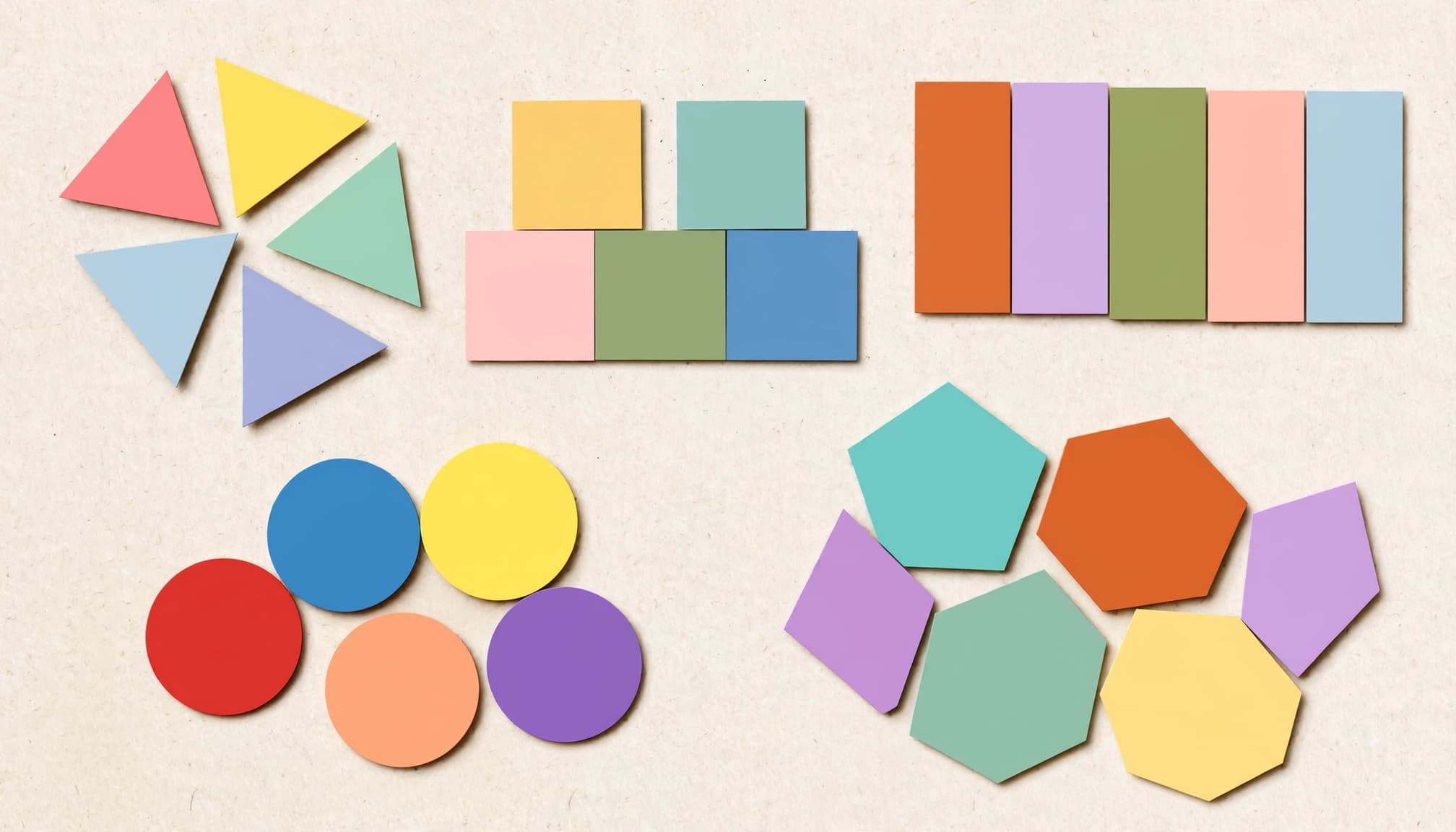
Explain sides, vertices, and polygons
Build geometric vocabulary by naming the parts of each shape. A side is a straight boundary segment of a polygon. A vertex is a corner where two sides meet; more than one vertex becomes vertices. An angle describes the opening between those meeting sides.
A polygon is a closed, flat figure made entirely of straight sides. Triangles and rectangles are polygons, but circles aren’t. An open zigzag isn’t a polygon, even if it has straight segments. Connecting straight sides, closure, and corners brings these fundamental geometric concepts together.
Use “corner” alongside “vertex” until the new word sticks. Geometry doesn’t need a vocabulary ambush.
Compare the features that identify each shape
Keep this reference nearby while your child sorts or draws.
| Shape | Straight sides | Vertices | Identifying feature |
|---|---|---|---|
| Circle | 0 | 0 | A continuous curved boundary |
| Triangle | 3 | 3 | Three straight sides |
| Quadrilateral | 4 | 4 | Any polygon with four sides |
| Rectangle | 4 | 4 | Four right angles |
| Square | 4 | 4 | Four equal sides and four right angles |
| Pentagon | 5 | 5 | Five straight sides |
| Hexagon | 6 | 6 | Six straight sides |
A right angle is a square corner, like the corner of a sheet of paper.
Side counts help classify these figures, but they don’t tell the whole story. For example, rectangles and squares need information about their angles, too.
Teach Shape Descriptions Before Testing Names
Trace, count, and describe together
Begin with a large paper triangle. Ask your child to trace its boundary slowly, counting its corners and sides as they go.
Next, mark each corner with a small dot. This helps children who count the starting corner twice or skip one during a speedy finger tour.
Model identifying shapes by their features: “This figure is closed. It has three straight sides and three vertices, so it’s a triangle.”
Then offer another triangle with a different size or orientation. Ask your child to use the same reasoning. Keep sessions short, and stop earlier if concentration has packed its bags.
Sort by a rule, then explain it
Offer a mixed collection of paper shapes. First, ask your child to gather every figure with four sides.
Next, have them sort that group into figures with four right angles and those without, using spatial reasoning to compare them. Finally, invite your child to invent a sorting rule, practice classifying shapes, and explain where each one belongs.
Use this sentence frame when needed: “I put these together because they all have _____.”
For another visual explanation, 2cool4school’s Grade 2 geometry lessons include comparing sides, side lengths, and angles. Pause a video so your child can demonstrate the same idea with paper shapes.
Clear Up the Shape Mix-Ups That Cause Trouble
Turning a figure doesn’t change its name
Rotate a paper square while your child watches. Its sides and angles stay the same, so it’s still a square.
Children sometimes call a tilted square a “diamond.” Accept that as an everyday description, then ask for its mathematical name using its attributes.
Also show long, narrow triangles and triangles with unequal sides. A triangle doesn’t need to look like a tidy roof.
Similarly, pentagons and hexagons can have unequal side lengths. Avoid showing only regular polygons, whose sides and angles are all equal. These varied examples build shape recognition by teaching children to focus on attributes.
Color, size, and direction don’t decide a shape’s name.
A square belongs to the rectangle family
A rectangle has four right angles. A square meets that rule and also has four equal sides, so every square is a rectangle.
However, every rectangle isn’t a square. A rectangle with two longer sides and two shorter sides lacks four equal sides.
Put a square inside the “rectangles” sorting group. Separate boxes can accidentally teach children that a figure can have only one name.
Keep flat shapes separate from solid objects, too. A cereal box is three-dimensional, while one face has a rectangular outline. A ball is a sphere, although a drawing of its outline may look circular.
Try Hands-On Drawing and Pattern Activities
Draw a shape that matches a description
Give your child a ruler, paper, and a simple instruction: “Draw a closed figure with five straight sides.”
Afterward, count the sides together and check that the boundary closes without a gap. Then ask your child to draw a different pentagon.
This follows Grade 2 math drawing expectations and discourages memorizing one familiar picture.
If pencil control gets in the way, let your child arrange craft sticks first. Focus on the mathematical features, not artistic polish. The ruler has no business becoming an art critic.
Make tiles fit without gaps
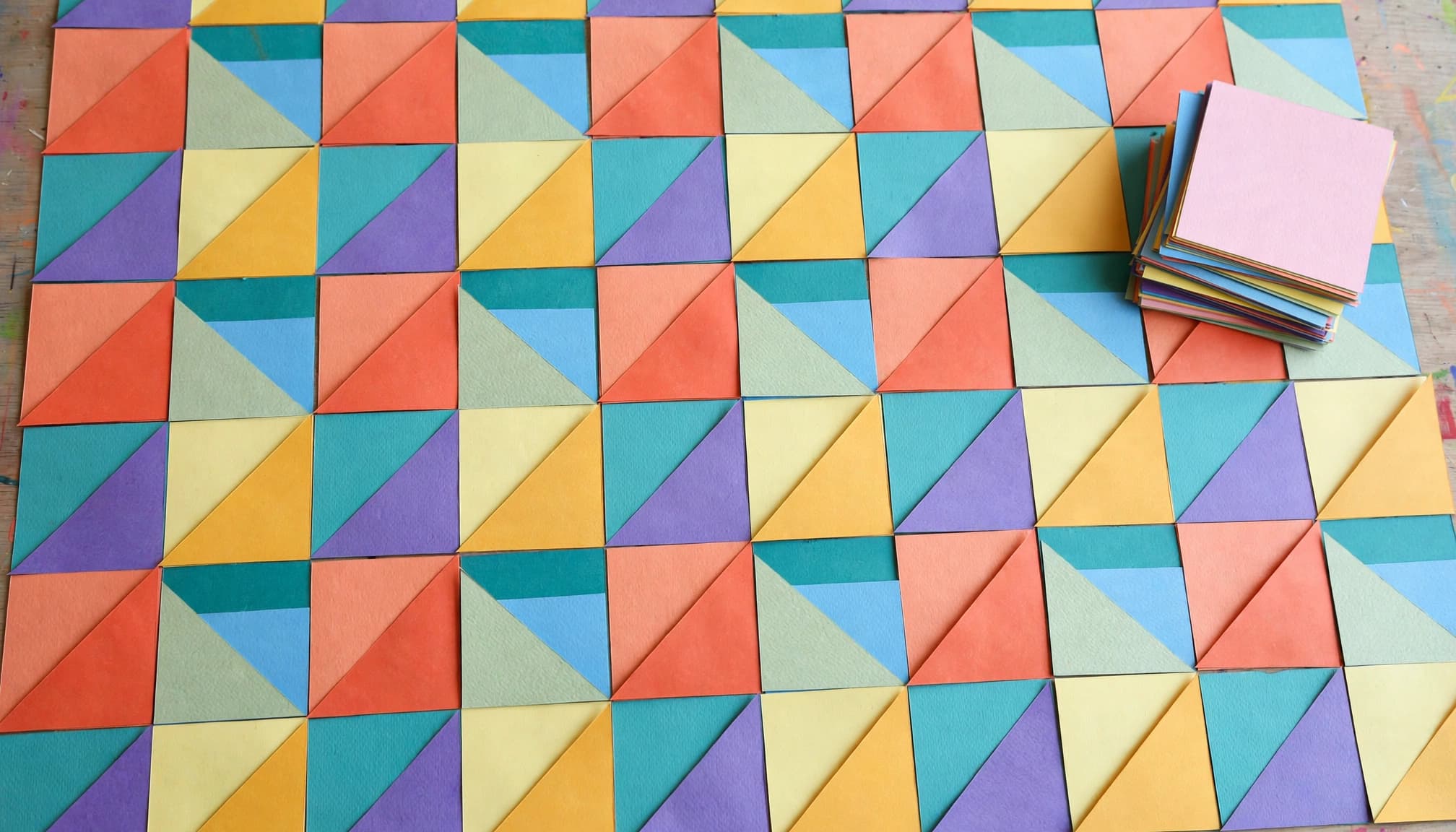
A tessellation covers a surface with shapes that fit without gaps or overlaps. Start with identical square paper tiles, then try identical triangles.
Ask your child to notice which sides meet and how turning a tile helps it fit. This builds spatial reasoning as children consider position as well as shape. Geometry presentations with visual examples can help children spot repeated tile arrangements.
Tessellation is useful enrichment, not a separate requirement in the Grade 2 Common Core geometry standards.
For more teaching resources, pair this hands-on activity with 2cool4school’s shape and number pattern lessons, which include identifying geometric designs and extending patterns.
Use Videos and Worksheets After Hands-On Learning
Make screen time a conversation
Videos and other educational presentations make reviewing two-dimensional shapes on screen more engaging when your child has something to do. When reviewing geometry 2d shapes, pause before the narrator identifies a figure, then ask for its sides, corners, and name.
Use geometry presentations or interactive lesson slides to show several examples together, including rotated and irregular figures. Ask your child to choose every triangle and explain each choice.
For an interactive game, watch whether your child reasons or guesses. After one round, ask them to recreate a shape with paper or a drawing.
2cool4school organizes human-curated educational videos by grade and topic. That structure can help families fit focused review into a homeschool curriculum or after-school routine.
Choose written practice that matches the difficulty
Use a worksheet after your child can demonstrate the idea with objects. Select a few relevant questions rather than assigning a whole page automatically.
Browse 2cool4school’s free worksheets by grade for printable worksheets. Grade 1 worksheets can support review when basic recognition still needs attention.
Check the actual questions before printing. A general math worksheet may cover number skills rather than geometry.
If your child struggles, return to tracing, sorting, or building. Another page won’t explain a concept that hasn’t clicked yet.
Check Understanding With Five Quick Prompts
Try these prompts across several short sessions to assess identifying shapes and describing their attributes. Let your child point, draw, or explain aloud.
- Turn a triangle upside down and ask, “What shape is this, and what do its corners and sides tell you?”
- Show a square beside a longer rectangle and ask, “How are these alike and different?”
- Ask your child to draw a closed shape with six straight sides.
- Present a circle and ask, “Why isn’t this a polygon?”
- Show an open five-segment figure and ask, “What would need to change for this to be a pentagon?”
Look for reasoning, not speed. Correct names with unclear explanations suggest your child needs more attribute practice.
Also separate counting problems from vocabulary problems. A child who counts six sides correctly but forgets “hexagon” needs a different next step than one who skips sides.
Once your child can describe shapes securely, related mathematical concepts in the Grade 2 geometry standards include dividing rectangles into equal squares and partitioning circles and rectangles into equal shares.
Key Takeaways for Shape Practice
- Ask your child to count and describe attributes before naming the figure.
- Include rotated shapes and unequal-sided polygons so recognition doesn’t depend on one familiar picture.
- Follow hands-on exploration with brief written practice, then use explanations to decide what to teach next.
A few thoughtful answers reveal more than a page completed through guessing.
Frequently Asked Questions About Grade 2 Shapes
Does a circle have a side?
For these polygon lessons, count straight sides. A circle has zero straight sides and zero vertices.
Some early-learning materials use “curved side” informally. If your child’s worksheet uses that wording, distinguish it from the straight sides counted in polygons. Consistent language prevents an unnecessary disagreement between home practice and classroom materials.
Should my child memorize every shape name?
Start with common figures, then introduce quadrilaterals, pentagons, and hexagons alongside their attributes. Naming and explaining should develop together.
If your child forgets “pentagon” but correctly describes five straight sides, supply the name and keep practicing. Meanwhile, avoid racing ahead to obscure polygons. Second-grade shape work needs clear reasoning more than an impressive vocabulary collection.
Help Your Child Explain What They See
When that upside-down triangle appears again, ask your child to trace its sides and explain its name. Attributes stay the same when a figure turns.
Choose one short activity, then follow it with matching practice from 2cool4school’s free worksheet collection. Keep the goal small and useful: a child who can explain a shape, rather than merely recognize its usual picture.