
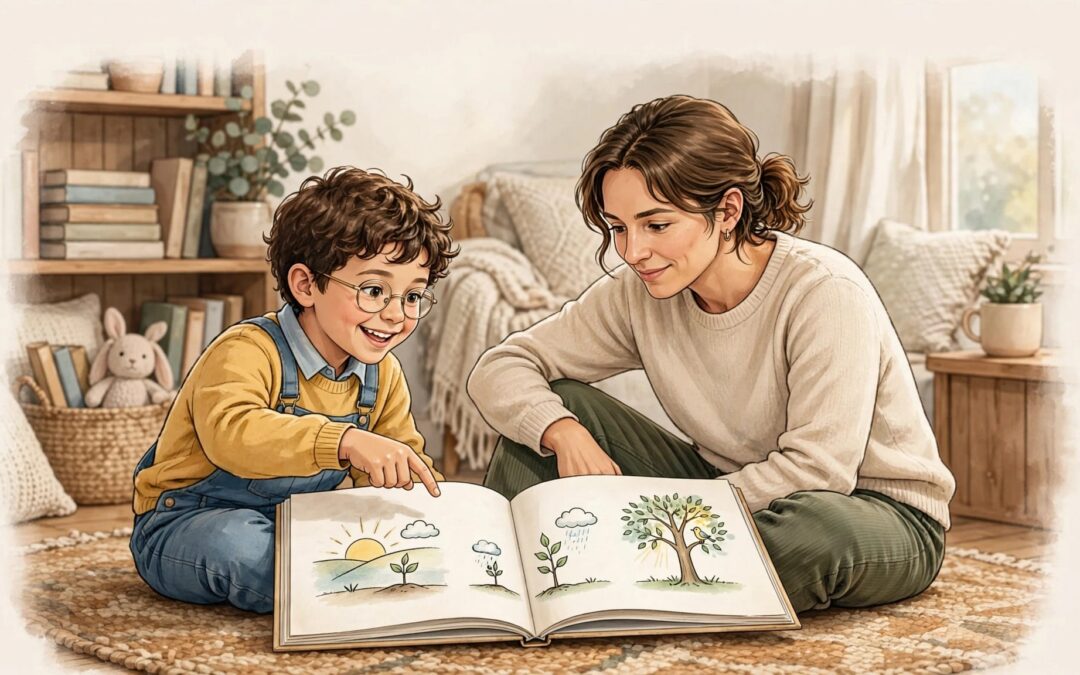
Your child closes the book and announces, “There was a rabbit!” That’s a start, but the rabbit probably did more than exist. Story retelling helps your first grader name key events in order and connect them to the beginning, middle, and end.
You can teach sequencing with a short read aloud, a clear model, and a few well-chosen prompts. Start with a manageable story, then help your child connect its parts.
Key Takeaways
- Choose a short story and model a retell before expecting independent practice.
- Include characters, setting, the problem, important events, and the ending.
- Accept spoken answers or drawings before adding writing, and return to the book when details disappear.
What Story Retelling Means in Grade 1
In Grade 1, children retell stories in order and use their own words to share the most important parts. They don’t need to repeat every sentence or remember decorative details.
The basic story elements are characters, setting, beginning, middle, and end. Children explain the problem, what happens, and how the characters respond. The setting tells where the events take place.
The Common Core Grade 1 literature standard asks children to retell stories with key details and identify the central message or lesson. Afterward, ask, “What did the character learn?” and invite your child to name an event from the text that supports the answer. This retell shows comprehension without requiring your child to repeat the story word for word.
Retelling also gives vocabulary a purpose: children use words to explain what happened.
Choose a Story Your Child Can Manage
Separate listening from word reading
Understood’s retelling guidance recommends choosing a story that takes no more than three to five minutes to read aloud. If your child reads independently, choose text they can decode and read fluently.
You can read the story to your child when the goal is understanding. A child who can retell a story after listening may still need help reading its words.
Our Grade 1 reading fluency practice offers ways to support accuracy and phrasing alongside comprehension. Keep word-reading practice manageable so unfamiliar words don’t interrupt the plot.
Repeat before expecting independence
Familiar stories leave more attention available for meaning. Reread on another day and ask about a different detail.
Kindergartenworks’ retelling activities use at least four read-alouds before children retell a book in a literacy center. The teacher keeps four to five books available at a time.
At home, revisit a small selection of stories instead of constantly introducing new ones. Children can bring familiar routines from kindergarten into Grade 1. The cited numbers describe a classroom routine, not a requirement for your child.
Use One Five-Finger Retell Framework
A five-finger retell gives your child five optional prompts without another worksheet. Use this version consistently for fiction.
| Finger | Story part | Parent prompt |
|---|---|---|
| Thumb | Characters | Which characters are in the story? |
| Index | Setting | Where and when does it happen? |
| Middle | Problem | What goes wrong or needs solving? |
| Ring | Main events | What important things happen? |
| Pinky | Resolution | How does the story end? |
Together, these story elements cover the beginning, middle, and end. Your child can hold up a hand while talking, but the fingers are reminders, not five separate mini-speeches.
Understood uses a different five-finger approach: who, what, where, when, and why. Who identifies characters; what addresses conflict or events; where and when describe the setting; why explores motives or resolution.
Both approaches organize thinking. Stick with one at first so your child doesn’t have to remember two systems while keeping a runaway gingerbread man straight. Your child may have encountered a retelling routine in kindergarten.
Follow This Five-Step Story Retelling Routine
Keep the order predictable. Understood’s retelling routine moves through modeling, previewing, reading, an independent attempt, rereading, and supported practice. Use the same routine at home or in a literacy center.
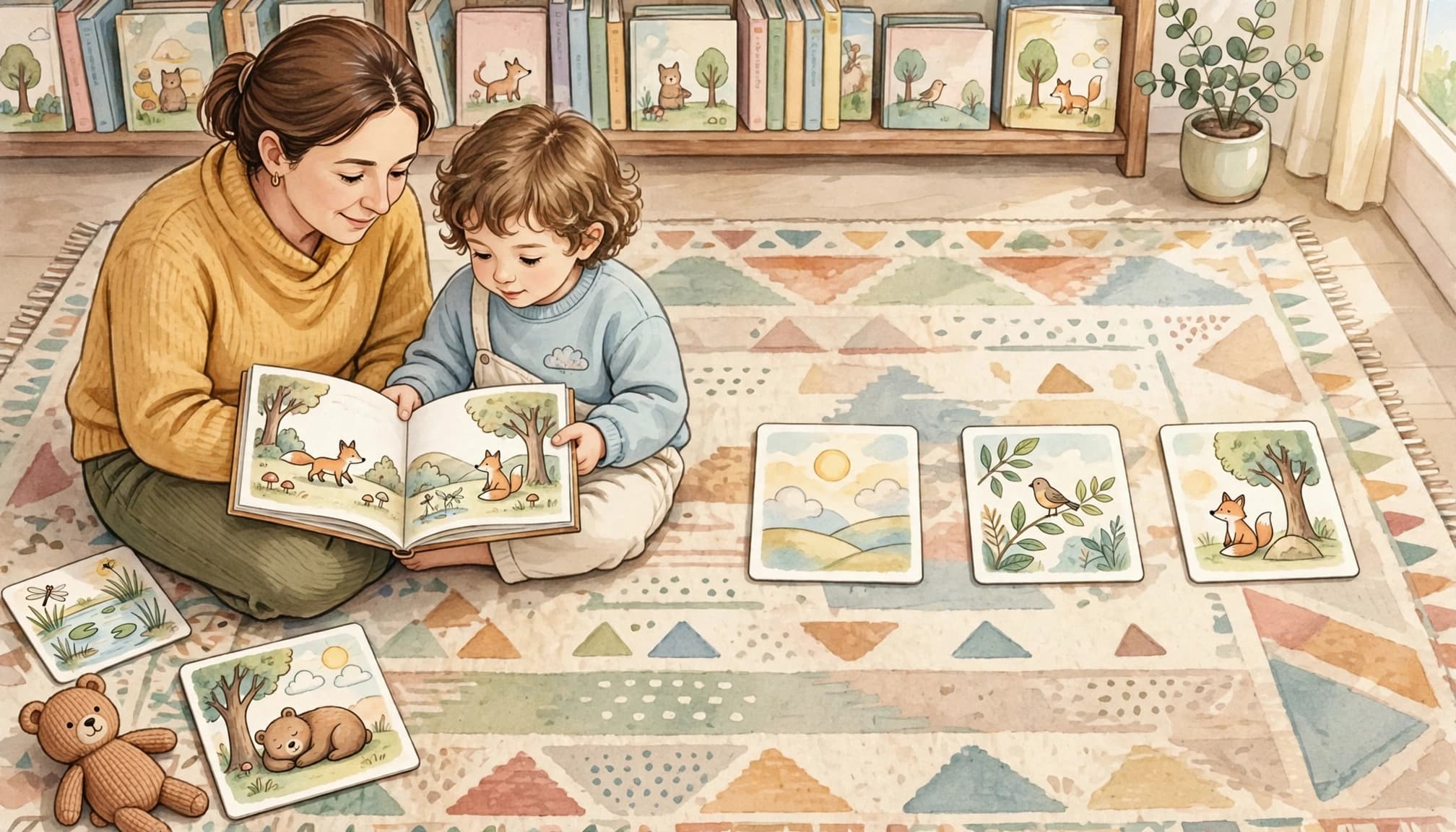
- Model and preview. Show your child how to retell stories by briefly recounting a familiar one. Before reading a new story, review its characters, setting, conflict, key events, and resolution. Introduce unfamiliar vocabulary and story elements your child may need help recognizing.
- Read or listen. Read together, let your child read suitable text, or read aloud yourself. Discuss a confusing word briefly, then return to the story.
- Invite an initial retell without supports. Say, “Tell me the important parts of the story.” Give your child time to think before offering questions, pictures, or corrections.
- Reread with a purpose. Revisit the story together. If your child missed the problem or ending, direct attention to that part without asking them to start over repeatedly.
- Retell with support. Offer five-finger prompts, pictures, props, or a beginning-middle-end organizer. Gradually reduce help as your child gains confidence.
Use the transition words first, next, then, after, and finally to connect events. Model them naturally instead of requiring every sentence to begin with one.
Record whether your child retold independently or used prompts. A supported retell and an independent one show different things.
A Complete Retelling Example: The Tortoise and the Hare
Aesop’s The Tortoise and the Hare has a clear problem and ending. Choose a short version, since details vary between editions.
Here’s a child-friendly retell:
“First, a hare and a tortoise agreed to race along a course. The hare thought he would win because he was much faster. Next, the race started, and the hare ran ahead. Then he stopped to rest and fell asleep. After that, the tortoise kept walking without stopping. Finally, the tortoise reached the finish before the hare. The story teaches us to keep trying and not get overconfident.”
This retell names the characters and setting, puts key details in order, explains the resolution, and states the central message.
For an informal home check, award one point for each clearly included part.
| Retelling feature | Included in the example? | Points |
|---|---|---|
| Story figures | Hare and tortoise | 1 |
| Place | A race course | 1 |
| Problem | Hare expects an easy win and stops | 1 |
| Important events in order | Race, rest, steady walking, finish | 1 |
| Resolution | Tortoise wins | 1 |
This example earns five points. The score simply identifies included elements; it isn’t a standardized assessment or a Grade 1 benchmark.
Let Your Child Draw, Talk, or Use Pictures
Retell with three picture cards
After reading, ask your child to draw the beginning, middle, and end on separate cards. Mix them up, then invite your child to arrange them for sequencing practice and retell the story in order. The cards also work well in a literacy center.
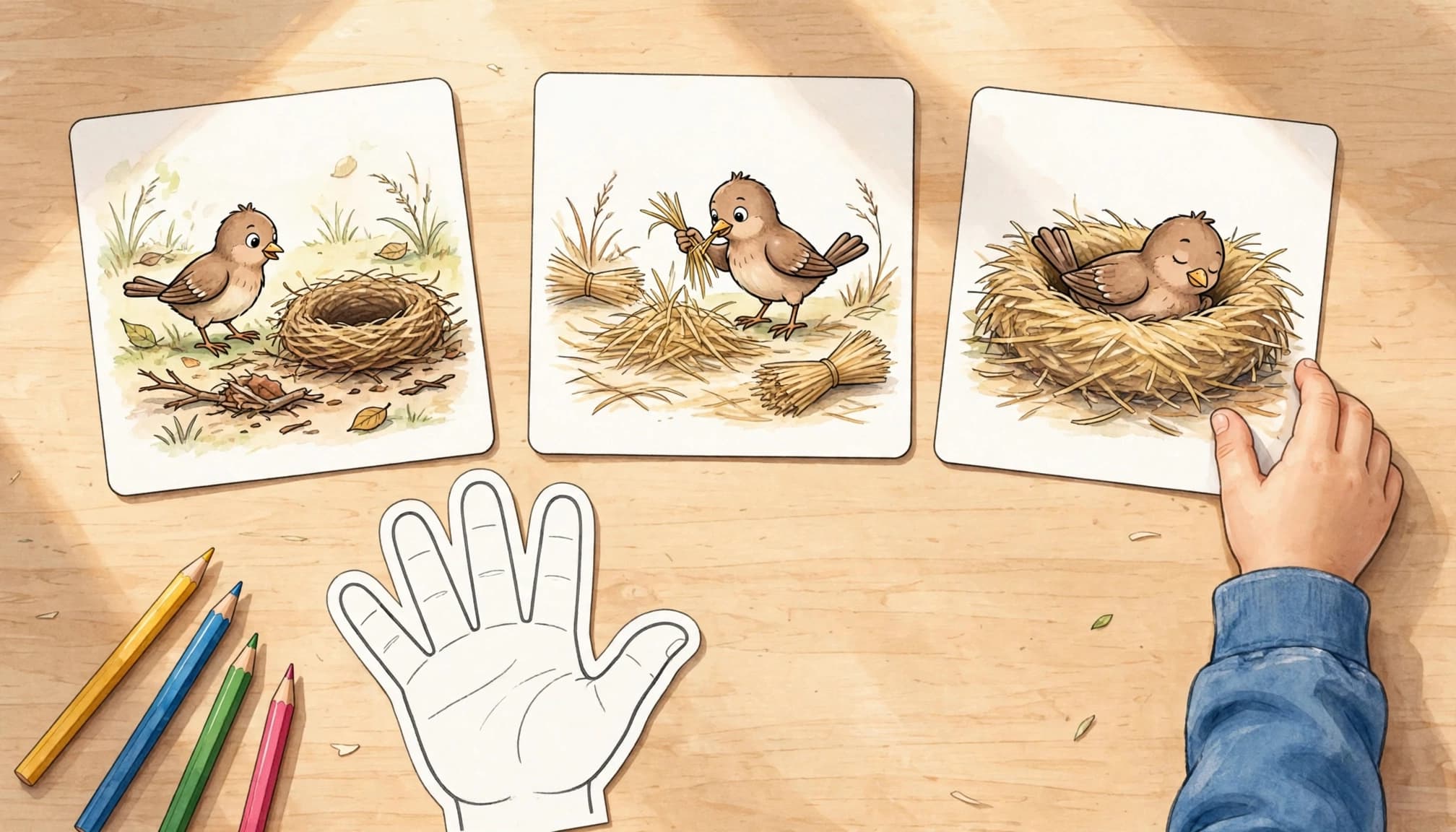
Ask, “What changed between the first picture and the last?” If an important event is missing, open the book and find it together.
Your child can explain the story verbally, through drawings, or in writing. Understood recommends 10 words or fewer per box for written organizers. A short caption can support the retelling without turning comprehension practice into a handwriting marathon.
Change the prompts for nonfiction
An informational book needs a different structure. Identify the topic, the author’s purpose, the main idea, and two to four supporting details.
Ask, “What is this mostly about?” followed by, “Which details help explain that?”
Keep fiction and nonfiction practice distinct. A book explaining animal habitats doesn’t need a villain, a chase, or a dramatic rescue.
Notice Progress Without Turning Reading Into a Test
Begin with familiar experiences and self-rating
If book retelling feels difficult, start with a familiar experience and use storytelling routines your child knows from kindergarten. Invite them to describe a playground visit in order.
Speechy Musings’ story retell guidance recommends personal experiences before picture books because they’re generally easier and more engaging. It also recommends having children rate their own attempts.
Afterward, ask your child which story parts they included. Offer one specific observation about their comprehension, such as, “You explained the problem clearly. Let’s add how it ended.”
Save an occasional dated sample and note the support you provided. Compare similar tasks rather than treating each completed page as proof of progress.
Describe difficulties clearly when asking for help
If retelling remains difficult after repeated supported practice, share examples with your child’s teacher or speech-language pathologist.
Explain what happens: your child names characters but scrambles events, leaves out endings, or understands stories when listening but struggles with print.
For an IEP discussion, useful goal-writing details include the task, expected story elements, permitted supports, and how progress will be recorded. The school team sets measurable criteria based on your child’s starting point.
A home retell score can inform that conversation, but it shouldn’t replace an individualized assessment.
Connect Retelling With Grade 1 Learning
Retelling belongs alongside phonics, vocabulary, and writing in a Grade 1 curriculum. For homeschool planning or after-school practice, teach one skill, then try it with a familiar story.
Our free worksheets for Grades 1-8 provide grade and subject choices. Select Grade 1 worksheets that match a skill your child has practiced, rather than handing over an unfamiliar task.
As your child grows more confident, our Grade 2 reading comprehension activities build toward identifying the main idea, using clues, and supporting answers with the text.
Frequently Asked Questions
Does a retell need every story detail?
No. Include details that help a listener understand the characters, problem, important events, and ending. A character’s hat color can usually retire peacefully unless it matters to the plot.
Is retelling the same as rewriting a classic?
The term has another meaning in creative writing. Jane Friedman’s guide to story retellings distinguishes loose versions, which depart from the original plot, from close versions, which preserve events and their order with small changes.
For Grade 1 comprehension, your child explains the original story accurately in their own words. Inventing a different ending is a separate writing activity.
Help the Story Stay Together
A useful retell connects important events in order. Model that connection, give your child time to talk, and return to the book when something goes missing.
Try one short story together, then choose a relevant worksheet from our free resources if paper practice helps. The rabbit deserves a plot, and your child can learn to tell it.