
PARENT RESOURCES & ARTICLES

Grade 1 Reading: Help Your Child Retell a Story
Your child closes the book and announces, "There was a rabbit!" That's a start, but the rabbit probably did more than exist. Story retelling helps your first grader name key events in order and connect them to the beginning, middle, and end. You can teach sequencing...

Grade 2 Money Math: Coin Values and Simple Change
A dime is smaller than a nickel but worth twice as much, so your child's confusion has a perfectly reasonable starting point. Grade 2 money math gets easier when you teach value before speed, then build toward counting mixed coins and finding change. Start with real...

Grade 4 Math: Help With Multi-Digit Division
Your child can know their multiplication facts and still freeze when a problem stretches across the page. To divide, start with equal groups, follow a repeatable routine, and multiply to check the result. Place value matters most: children need to understand what the...
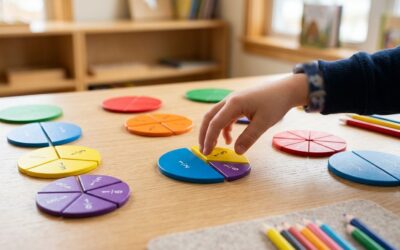
Grade 5 Fractions: Add and Subtract Unlike Denominators
Your child can solve 3/8 + 2/8, then see 1/2 + 1/3 and wonder if fractions changed the rules. With unlike fractions, first rename each fraction as an equivalent fraction with a shared denominator, so both show equal parts. Then add fractions or subtract fractions by...
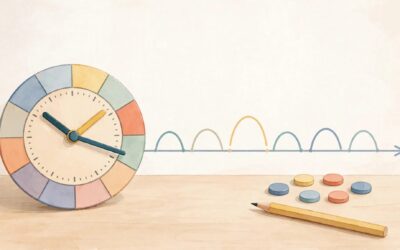
Grade 3 Elapsed Time: Solve With Clocks and Timelines
Your child can read 3:45 perfectly, then announce that 4:10 is 65 minutes later. Clock arithmetic has a sneaky catch: an hour contains 60 minutes, not 100. For grade 3 elapsed time, start with a movable clock, then show the passing minutes as jumps along a timeline....